Convertible tops · West Bend, Wisconsin
Convertible Top Repair & Restoration
A convertible top is a complete fitted system. The covering, supporting structure, windows, seals, and operating parts work together to shape the roof, meet the body, and move as designed. G4 Upholstery brings experience with European and German vehicles while serving a range of cars across Southeastern Wisconsin.
Vehicle access and intake arrangements must be discussed and confirmed before a project is accepted. Please do not bring or ship anything before arrangements are agreed.
A closer look
What’s underneath your convertible top?
The outer covering is only one part of the assembly. Select a numbered point in the illustration or its matching description to explore the pieces around it.
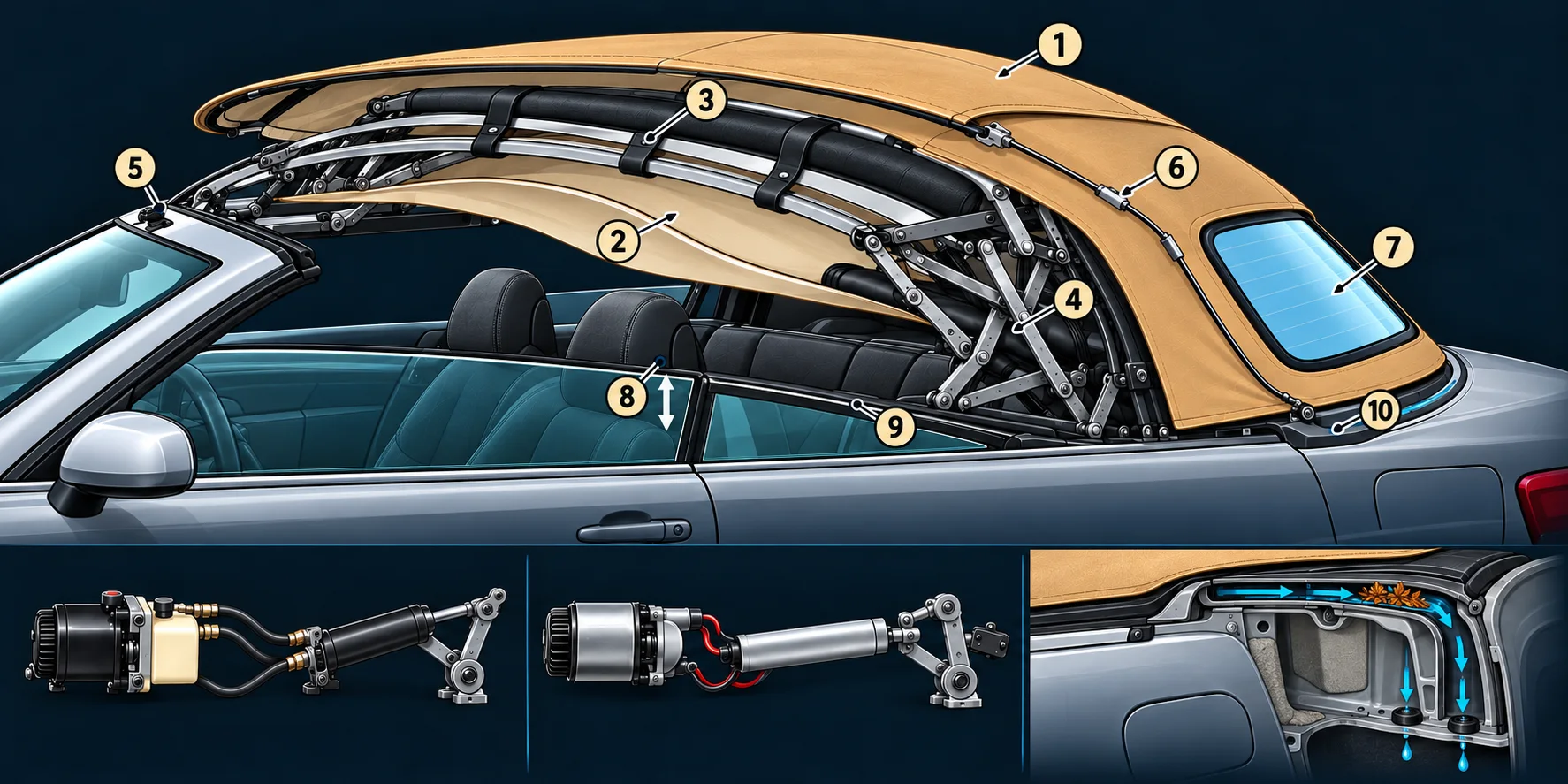
Conceptual illustration. Components and locations vary by vehicle; not all systems include every item shown.
Covering and interior layers
Structure and fit
Weather protection
Powered operation, where equipped
The lower insets show different examples: a hydraulic drive, an electric drive, and a drainage detail. They are not one combined system. Powered roof layouts differ, and a vehicle may use one type of drive or another.
- Hydraulic pump or reservoir, hoses, and cylinders
- Electric drives, where applicable
- Position sensors and microswitches
- Wiring and roof control module
Shape, tension, and closure
Why fit and alignment matter
Fabric tension cannot compensate for every worn, bent, or misaligned part underneath. A sound assessment considers the roof as a fitted assembly.
Frame and bow geometry. The frame and bows establish the roof shape and the path it follows while folding.
Pads and straps. Pads support and shape the covering over the bows; straps guide how it folds. Condition in either can affect support, folding, and fabric wear.
Tension cables. Where fitted, cables help control the covering along its edges and influence how it lies against the car.
Rear bow and window position. Vehicle-specific geometry affects the roof’s rear profile and how the window sits in relation to the body.
Door and quarter-window alignment. Side glass must meet the roof seals at the right height and angle. This is a separate fit relationship from rear-bow height.
Latches and seals. The header latches secure the front edge; weatherstripping helps close the gaps around the glass and body.
Start with what you see or hear
What are you noticing?
These clues can help frame an assessment; they do not identify a cause on their own.
Tears, worn seams, or abrasion
Loose fabric or uneven wrinkles
Edges pulling away or poor tension
Cloudy or cracked plastic rear window, or separation around rear glass
Wind noise or gaps at side windows
Water entering the cabin
Uneven, slow, or incomplete roof movement
Roof warning messages or interrupted operating sequences
Leaks can involve seals, glass alignment, drainage, or the covering. Movement problems may involve mechanical, hydraulic, or electrical systems. A new covering does not automatically resolve every leak or operating fault.
Where the roof is powered
Movement and electronic coordination
Some roofs coordinate several steps: windows may lower, latches may release, the top moves, and a storage cover opens or closes. The order depends on the vehicle.
Sensors and switches report component positions so the control system can manage that sequence. A roof that stops partway may have a mechanical, hydraulic, electrical, or control-related cause. The scope and any need for additional specialist work are established for the individual vehicle.
Face · integrated layer · backing
Material follows the application
Choosing the right material
Cloth and vinyl differ in surface, texture, weave, and how they suit the original appearance. Color and backing matter too, along with the pattern and construction required by the vehicle.
Haartz Stayfast and appropriate Sonnenland options are examples to consider, subject to vehicle compatibility and availability. The backing built into a topping material is not the same thing as a separate interior headliner. No single material suits every European or German car.
A considered first conversation
Planning the work around your car
Photos and vehicle details help us begin. They are not a final diagnosis or fixed quote; some conditions only become visible during disassembly.
- STEP 01
Review vehicle details and photographs
- STEP 02
Discuss condition, restoration goals, and known operating issues
- STEP 03
Confirm vehicle access and intake arrangements
- STEP 04
Assess the vehicle as arranged and confirm the scope
- STEP 05
Discuss underlying issues or additional work identified
A few common questions
Helpful FAQs
Can the top be repaired, or does it need replacement?
Sometimes a local repair is appropriate; worn material, failed seams, window damage, or broader fit issues may call for more work. The roof design and condition need to be assessed before deciding.
Do pads, straps, and cables need replacing too?
Only if their condition and the roof design call for it. They are checked as part of the overall fit because worn support parts can affect folding, shape, and fabric wear.
Can the rear window be repaired or replaced separately?
It depends on the make, model, window attachment, and condition. Some windows are separate and replaceable; others are integrated with the covering. Some fold as the top lowers. On certain vehicles, a plastic window may be upgraded to glass, sometimes with heated defrost if the design and electrical setup support it. Glass needs correct fit and careful installation because improper installation can stress and break it. The options and scope are confirmed for the individual vehicle.
Will a new covering fix leaks or wind noise?
Not automatically. Leaks and noise can involve the covering, seals, glass alignment, attachment points, or drainage. The source needs to be assessed.
What if the roof does not open or close correctly?
Share what happens and any warning messages. Movement faults can involve mechanical, hydraulic, or electrical systems; the scope and any specialist work are established for that vehicle.
What photos should I send?
Send the complete closed roof from both sides and the rear, then close-ups of damage, window edges, seals, and affected trim. Use existing photos or take them with the roof in its current position; do not cycle a malfunctioning roof for pictures.
How are vehicle access and intake arranged?
We first discuss the vehicle and project, then confirm access and intake arrangements before accepting the work. G4 is home-based and does not accept whole vehicles at that location. Do not bring or ship anything before arrangements are agreed.
Project inquiry
Tell Me About Your Convertible
A few details will help start a useful conversation. Share existing photos or take them with the roof in its current position. Please do not cycle a malfunctioning roof to get pictures.
Contact G4 UpholsteryHelpful details to include
- Year, make, and model
- Current top material, if known
- Complete closed roof from both sides and rear
- Close-ups of damage, window edges, seals, and affected trim
- Description of leaks, wind noise, or operating problems
- Whether the roof currently opens, closes, and latches
- Known prior repairs or replacement history
- Desired repair or restoration outcome
- Vehicle location for discussing access